Thanks BIH (Berndt-Ivan Holmberg) for v/s info on WSUA Miami, FL 1260. This station was heard in Lemmenjoki in October 2011 in a mess of stations including WMKI R Disney, WSKO Syracuse interfered by Colombians! I have previously heard this station a couple of times in 2009 and 2010 but my reception reports have never been verified. Now, thanks to BIH’s fresh contact I got a a confirmation in less than half an hour from Tomas Martinez, VP and GM of WSUA. Thanks a lot Tomas for your kind effort!
This station has been logged at several occasions during this and last year in Scandinavia. The frequency, 1360, is usually “blocked” by Rádio Bandeirantes of Rio de Janeiro. The frequency however holds several non-common brazilians that have been irregularly logged here. Among these can be mentioned R Cultura, Paulo Afonso, CE; R Cidade, Pato Branco PR (rare); R Ouro Branco, Currais Novos, RN (rare) and ; R Belos Vales, Ibirama, SC.
I had the opportunity to hear R Iracema on May 8, 1999 (UTC) with good signal, and with the complete absence of the dominant R Bandeirantes. My report was confirmed by João Bosco Farias Aragão, Diretor Geral with a four page letter (that was the good old times!), three audio casetts, a huge amount of station information etc. We, that were active long ago, remember the feeling when we got a notice from the local post office that one should pick up a postage from abroad. This was always a thrill.
From the QSL-letter from R Iracema I cite:
“Confirmamos todos os detalhes por voce relatado em sua carta, relativos a nossa emissora tais como, identificacão: Rádio Iracema de Ipú, prefixo ZYH-650, 1360 kilohertz onda média, potencia de 1000 watts etc. No dia 7 de maio de 1999, quando foi sintonizada por voce aí na Finlandia, nossa estacão estava realmente transmitindo um programa semanal de música intitulado “Programa do Boris”, que vai ao ar todas as sextas-feiras, no horário de 20.0 as 23.00 horas. Para melhor comprovacão, estamos enviando anexo tres fitas, com gravacão de todo o programa do dia 21 de maio 1999, no qual fazemos referencia a sua carta”.
I include an mp3 audio below containing a fragment of the massive recordings I received.

KTIL does not belong to the most often captured stations from Oregon here in Scandinavia. In late October KTIL was heard by several DXers up here on 1590 and Shaena at KTIL kindly sent me a brief confirmation note. Thanks Shaena!

KKEE is among the regularly heard Hawaiian stations in the Northern parts of Scandinavia almost every season. For some reason I had never got a QSL from this station before a couple of days ago when a short email from Michael Kelly, President and GM, confirmed my latest reception of KKEE from October 2011. Thanks Michael.
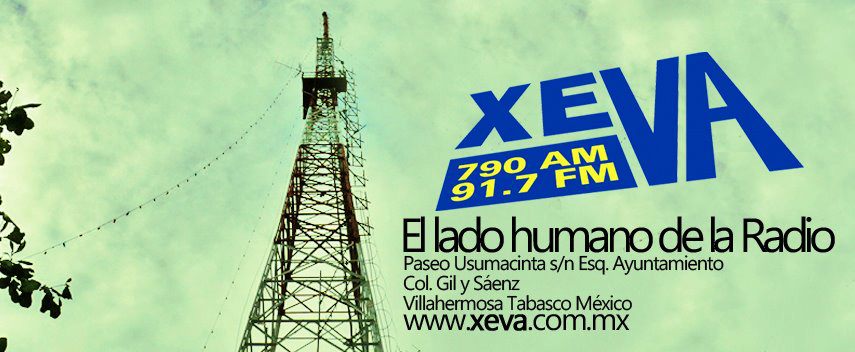
XEVA was heard in Lemmenjoki on October 22, 2011 carrying the program “Mi Rancho el Porvenir”. I got a nice mail from Juanjo Perezvidrio confirming my reception. He even found out some extra details from the enclosed mp3 I sent him that I had not recognized! Orejas afiliadas Juanjo!!!
XEVA is transmitting from Villahermosa, the Capital city of the State of Tabasco, México. XEVA was born on MaY 14, 1960 and has thus celebrated it’s 52nd Anniversary this year. During the installation of the station it was questioned whether the newborn would be a boy or a girl. It was agreed that it certainly was a girl who was named Eva. And thus, the resulting XEVA call letters are easily explained!
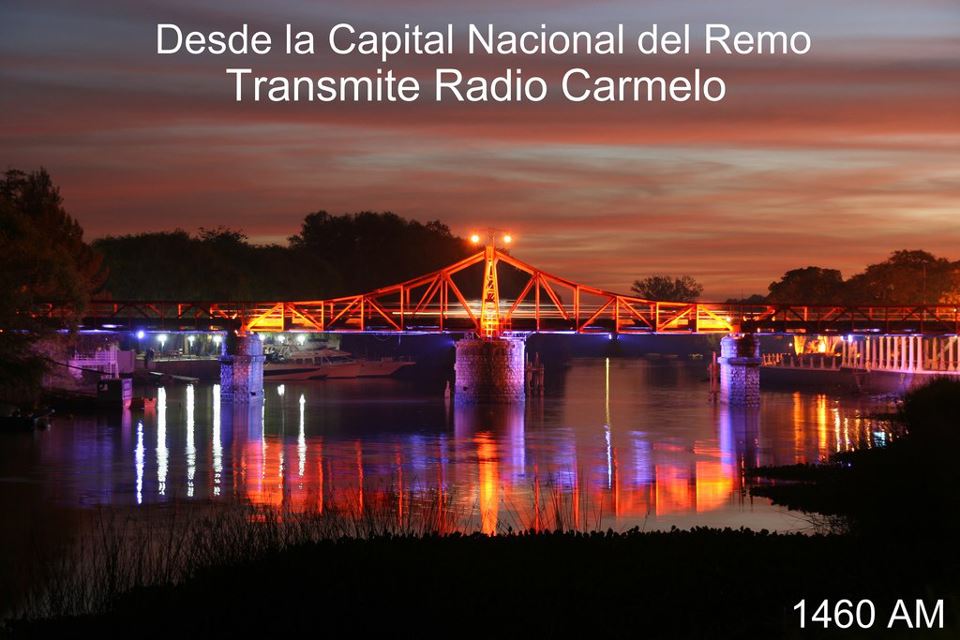
CX146 Radio Carmelo transmitting on 1460 is a very rare Uruguay-station to be heard in Finland and Scandinavia. The station was first logged in Finland in Lemmenjoki during the LEM85-pedition (Håkan Sundman and Mika Mäkeläinen) on October 26, 1995 and a couple of weeks later by LEM87 (Jarmo Havukunnas and Jan-Erik Österholm). It would the take more than 10 years before the station was logged again in Finland by LEM239 (Jari Ruohomäki and Mika Mäkeläinen) and more recently by LEM290 Pertti Äyräs and Jan-Erik Österholm) in early February 2010. The only common station on 1460 from South America (excluding Brazil) that can be said to be regularly heard is Nuevo Continente in Bogotá.
It was therefore very nice to receive a message via Facebook from Radio Carmelo recently confirming my reception of the station on January 29, 2010. The bridge seen on the picture above, the Puente Giratorio de Carmelo celebrated it’s 100th Anniversary this spring and is also pictured on the City Seal of Carmelo.
The frequency 1470 kHz has for long been one of the best so called propagation indicator frequencies on the AM band here in Scandinavia. At least earlier, I used to first check this frequency to check where the signals were moving. A reason for that was – and still is – that 1470 is free of interferences from European stations, the closest European channels being on 1467 and 1476, respectively. And 1470 has turned out to be a gold mine that never disappoints DXers, whether we look for catches from US/Canada, Central America, Orinoco, the Andean countries, Brazil or the La Plata region. During my years, I have received QSLs from 31 stations in South America transmitting on 1470. In addition to these many stations from US, México and the Caribbean. And the funny thing is, the frequency never seems to disappoint us, new stations are regularly heard.
A personally nice memory is the logging, on June 2, 1991, of ZYH665 Radio Guanacés de Itapajé, CE, BRA. The station was first logged in Finland by Pertti Äyräs on May 20, 1991 only two weeks after the station went on air on May 5, 1991. At the time of these logings the name Rádio Guanacés was not listed but WRTH1991 Edition listed a Brazilian CP-station as Rádio A Voz de Itapajé Limitada. I sent a tentative report including an old fashioned tape recording to Itapajé with the question whether the station really was on air. I received a very nice confirmation from José Ezaclyr Montenegro, Diretor Artístico and Eldo Rios Louzada, Diretor Geral together with half a kilogram of Brazilian coffee (!), station materials and a 60 min cassette including beautiful Brazilian music from the program “Super Paradao Sertanejo” and a long personal greeting which can be heard on the enclosed mp3 audio file.
Today Rádio Guanacés has an agenda focusing on the value conflicts arising within the local and national social sectors and finding a solution to the same. Rádio Guanacés continuously help local institutions in democratic debates concerning the region of Itapajé Uruburetama.


A short email from David Settle confirmed my reception of KOWB on 1290, a not so unusual catch in Scandinavia.
A Short message via Facebook confirmed today my reception of Radio Antares on 1650 on January 31, 2009 during the LEM274 pedition.
 americadx